We facilitate Nature- and People-Positive renewable energy and grid deployment by establishing an industry-supported and government-endorsed monitoring and reporting framework on a global scale.
Nature-Positive
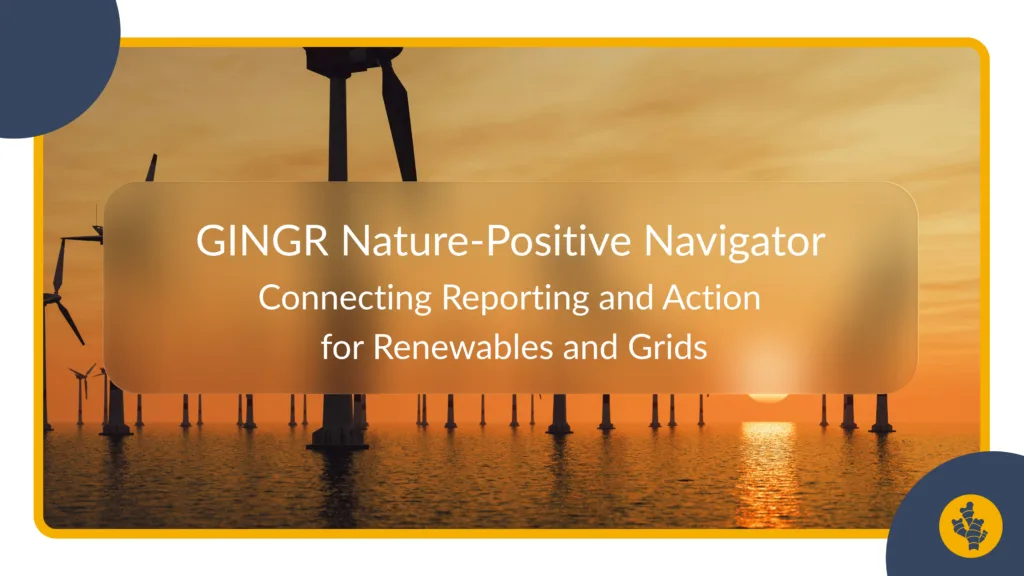
In recognition of the established Nature-Positive definition, we work to identify the specific contributions of the wind, solar and electricity grid sectors to the targets set by the Kunming-Montreal Global Biodiversity Framework.
People-Positive
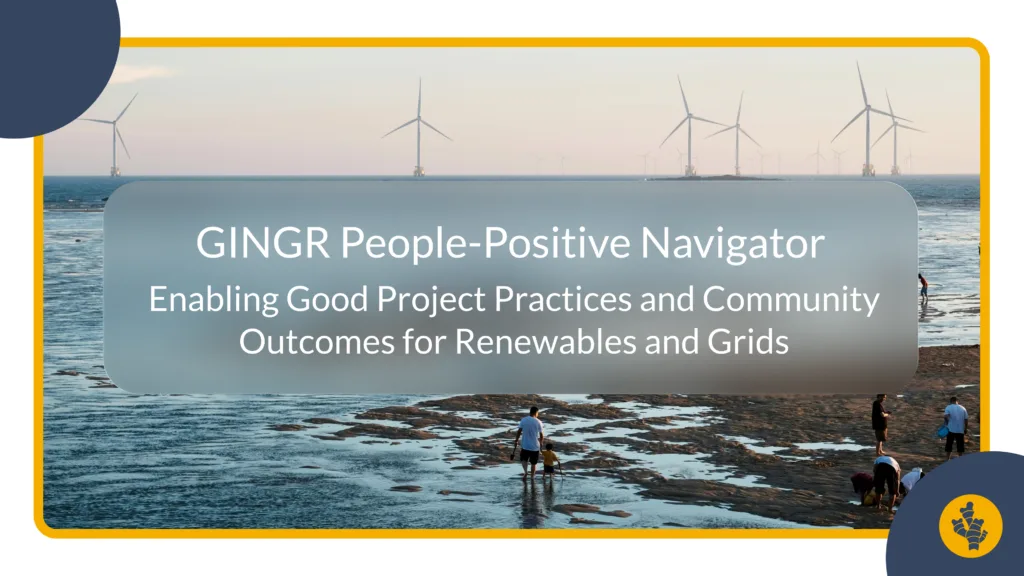
We recognise the undeniable need to involve, respect and engage communities where wind, solar and electricity grids will be built. We aim to quantify progress in co-creating local, sustainable and long-term benefits.
Vision
A rapid energy transition enabled by wind, solar and electricity grids that embraces Nature- and People-Positive goals.
What We Do
The Global Initiative for Nature, Grids and Renewables (GINGR) aims to support the just and sustainable energy transition by providing assessment tools to quantify contributions to Nature- and People-Positive goals. To facilitate this, we intend to develop monitoring and reporting systems that are globally aligned and standardised.
The initiative will support governments, companies, and the financial sector in achieving their energy, climate, and biodiversity targets in a timely and socially responsible manner.
“Mitigating the climate crisis is not possible without healthy ecosystems and strong communities. Therefore responses to the crises need to go hand-in-hand. GINGR aims to support governments, industries, civil society, and the financial sector in reaching their energy, climate and biodiversity targets in a timely and symbiotic manner. It will support, enhance and help monitor efforts towards these objectives while accelerating the green energy transition.”
Dr. Karsten SachChair, GINGR International Advisory Board
“You treasure what you measure, as the saying goes. But however much we treasure our biodiverse world, measuring it is a complex and uncertain science. The global growth in offshore wind makes this especially important, so that the installations don’t just bring economic and social benefits but can be positive for nature as well. Better measurement tools drive better decisions, and that’s where GINGR can play an important role.”
Huub den Rooijen CBEManaging Director, 3blue Advisory
“The Global Initiative for Nature, Grids, and Renewables strives to provide actionable guidance for delivering real solutions to the climate and biodiversity crises we face worldwide. Renewable energy infrastructure development confronts several common challenges for nature and communities in nearly every geography. By providing expert guidance and best practices, GINGR will help reduce conflicts and accelerate solution adoption on every continent.”
Max LevineManaging Director, CEA Consulting
“The renewable energy transition is more than windfarms, solar panels or biofuels. It must also include the ‘arteries’ for renewable energy deployment: Grids. GINGR will help ensuring that the transition of the entire energy sector is Nature- and People-Positive.”
Dr. Christina Voigt (LL.M.)Professor, University of Oslo
“One of the greatest challenges of our time is climate change which needs to be tackled seriously through collaborations of all governments, institutions, businesses and individuals. GINGR is one of the powerful efforts in fighting climate change and I’m very proud to be part of it.”
Dr. Chengyu FuFormer Chairman, China Petrochemical Corporation (Sinopec Group)
Are you a…
Renewable energy developer or grid operator eager to speed up the energy transition, but worried about the impact of biodiversity regulations?
Government trying to fight the climate, energy and biodiversity crises, but struggling to prioritise one over the other?
Civil society organisation fighting for stronger climate and biodiversity actions, but are unsure how to reconcile the environmental impacts of energy infrastructure?
Financial institution committed to channel funds towards sustainable investment that can deliver both climate and biodiversity security but struggling to meet both?