
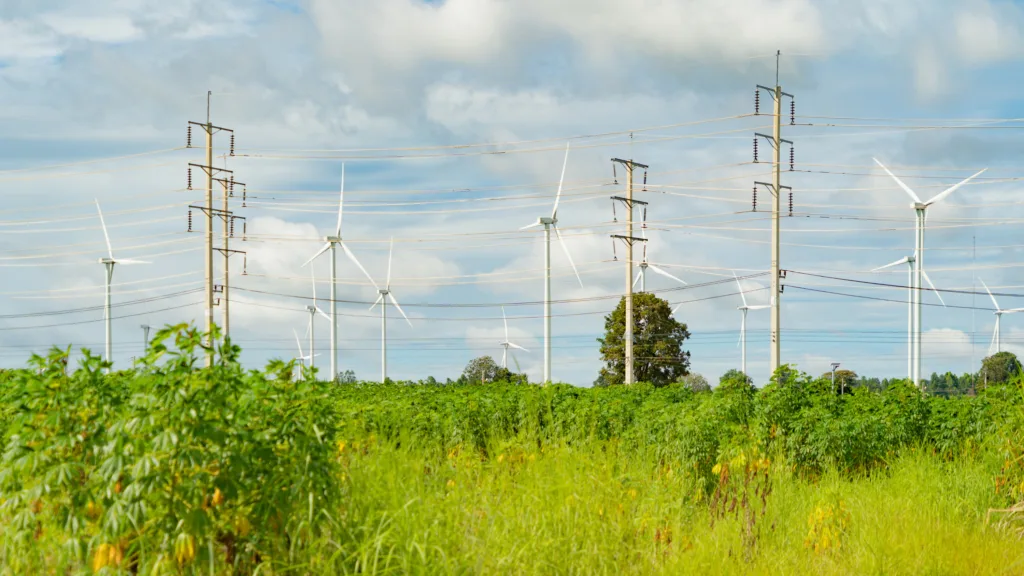
GINGR has released its first White Paper, Powering a Nature-Positive Future: A Renewable Energy Roadmap, outlining how the global energy sector can actively contribute to halting and reversing biodiversity loss while supporting communities.
Building on insights from the GINGR Navigator discussion papers on Maritime Spatial Planning and Monitoring Biodiversity at Sea (November 2024), and complementing the OCEaN Mitigation Report, this publication provides a practical pathway for renewable energy actors, governments, and financiers to align their operations with the global Nature-Positive goal.
Written by biodiversity, climate and renewable energy experts from IUCN and BirdLife International, the White Paper identifies how the energy transition can deliver measurable benefits for biodiversity and communities. It emphasises the central role of the mitigation hierarchy—avoid, minimise, restore, and offset—as a stepwise approach to achieving “no net loss” and ultimately “net gain” for nature.
Beyond minimising harm, the paper demonstrates how renewable energy development can proactively enhance biodiversity and ecosystem resilience through measures such as habitat restoration, responsible sourcing, and in-situ conservation. It also highlights opportunities for cross-sector collaboration, from mining to grid infrastructure, to achieve truly Nature- and People-Positive outcomes.
The publication provides actionable recommendations:
- For industry: integrate the mitigation hierarchy across value chains, ensure responsible sourcing, and establish long-term biodiversity monitoring.
- For governments: embed nature-safe planning in national strategies, mandate environmental assessments, and include non-price biodiversity criteria in renewable energy tenders.
- For civil society: advocate for transparent, science-based biodiversity metrics and inclusive, community-centred decision-making.
This White Paper continues the evolution of GINGR’s knowledge platform. While the Navigator on Maritime Spatial Planning offered tools to ensure offshore wind deployment is Nature- and People-Positive, and the Navigator on Monitoring Biodiversity at Sea advanced standardised approaches to tracking ecosystem health, the White Paper brings these strands together in a unified roadmap for global implementation.
Powering a Nature-Positive Future reaffirms GINGR’s mission: to harmonise renewable energy expansion with biodiversity protection and community well-being. It underscores that a Nature-Positive energy sector is not only achievable but essential to meeting the Paris Agreement and the Kunming-Montreal Global Biodiversity Framework targets.