
Metrics TWG Advances Nature-Positive Metrics and Net Gain Approaches
Updated: Jun 17
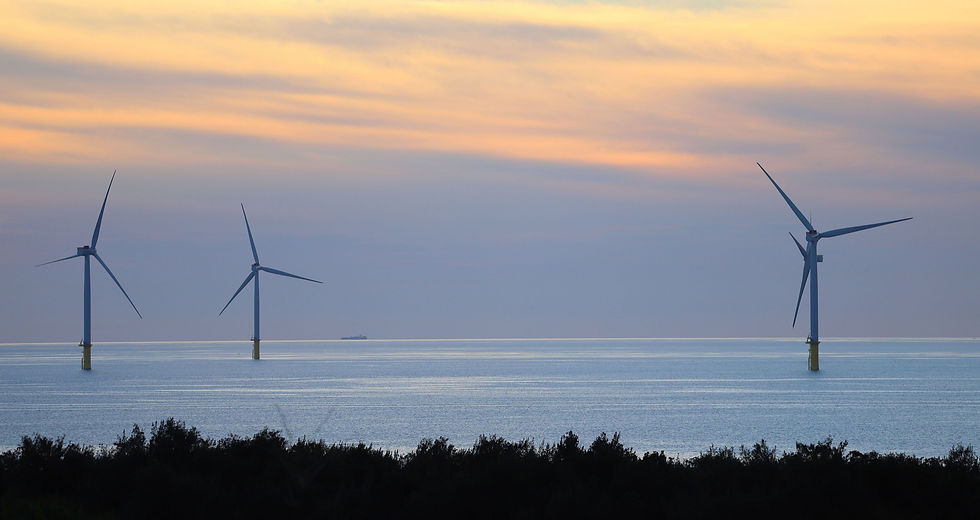
The Technical Working Group on Metrics (Metrics TWG) continues to advance its work at the intersection of renewable energy development and biodiversity conservation, contributing to a growing evidence base for achieving Nature-Positive, socially equitable outcomes in the offshore wind and grid sectors.
Building on its collaborative, multi-stakeholder approach, the group is developing practical tools and guidance to support consistent, transparent, and science-based measurement of biodiversity outcomes across project lifecycles.
A key milestone is the development of a discussion paper on biodiversity net gain, which explores pathways for operationalising net gain in marine environments, addressing both conceptual challenges and real-world implementation considerations. It examines how different approaches—ranging from qualitative frameworks to more quantitative metrics—can be applied to assess biodiversity change and inform decision-making. In doing so, it contributes to bridging the gap between high-level biodiversity commitments and project-level delivery. This work supports broader efforts to align renewable energy deployment with global biodiversity goals, while recognising the importance of context-specific, science-based approaches.

In parallel, the TWG is progressing the development of the Offshore Wind Nature-Positive Contribution Framework, with technical inputs from Bluedot and other partners. The framework aims to consolidate existing methodologies and emerging practices into a coherent structure that can support consistent application across geographies and project types.
The ambition is to develop a practical toolbox that enables stakeholders to:
define and measure biodiversity losses and gains
select appropriate metrics
understand the scope and scale of actions needed
deal with the added complexity of the marine environment
By strengthening consistency and credibility in measurement, the framework will help underpin accountability and enable more effective tracking of progress towards Nature-Positive outcomes. The framework is intended to guide projects through five core functions:
Frame – align with the right concepts and principles for measurable Nature-Positive contributions
Assess – understand and define biodiversity losses and gains
Measure – identify and apply appropriate metrics
Define – determine the scale and scope of contributions
Deliver – operationalise and implement actions effectively
The framework supports offshore wind developers in overcoming practical and technical barriers to achieving biodiversity improvements, going beyond simply reducing harm to actively creating measurable gains for nature. It is aligned with the Kunming-Montreal Global Biodiversity Framework and the broader goal to halt and reverse nature loss by 2030.
To support accessibility and user uptake, the team is also planning a wireframe for a dedicated webpage that will present the metrics framework in a clear, user-friendly format. The proposed page will help users navigate the framework’s components, understand how different indicators and methodologies relate to one another, and access supporting guidance and resources more efficiently. This digital interface is intended to make the framework easier to communicate, test, and refine with stakeholders as development progresses.
The Metrics TWG continues to convene a diverse network of stakeholders—from industry and finance to conservation organisations and policymakers—to co-develop and refine its outputs. Through technical exchanges, workshops, and webinars, the group is fostering shared understanding and building consensus on key principles for biodiversity measurement and net gain delivery. These dialogues are critical to ensuring that methodologies are not only scientifically robust, but also practical, inclusive, and responsive to different regional and regulatory contexts.
Looking forward, the TWG will focus on translating emerging concepts into actionable guidance, including:
Finalising and disseminating the biodiversity net gain discussion paper
Advancing the next iteration of the metrics framework
Testing and refining approaches through stakeholder engagement and real-world application
As biodiversity targets become an increasingly central component of sustainable development and climate action, strengthening how impacts are measured, managed, and reported remains essential. Through its work, the Metrics TWG is contributing to a shared, science-based foundation for ensuring that the energy transition delivers not only climate benefits, but also measurable gains for biodiversity and people.
Interested in supporting the Metrics TWG or have questions about GINGR's work on Nature-Positive offshore wind and grids? Contact us at info@gingr.org.